Ever since childhood, there have been times when I would get what I have come to think of as "lima bean brain." So here I am: awake at 3 AM, bemused over how strange it is that evolution ever thought it was a good idea to try to teach meat to think.

Ever since childhood, there have been times when I would get what I have come to think of as "lima bean brain." So here I am: awake at 3 AM, bemused over how strange it is that evolution ever thought it was a good idea to try to teach meat to think.
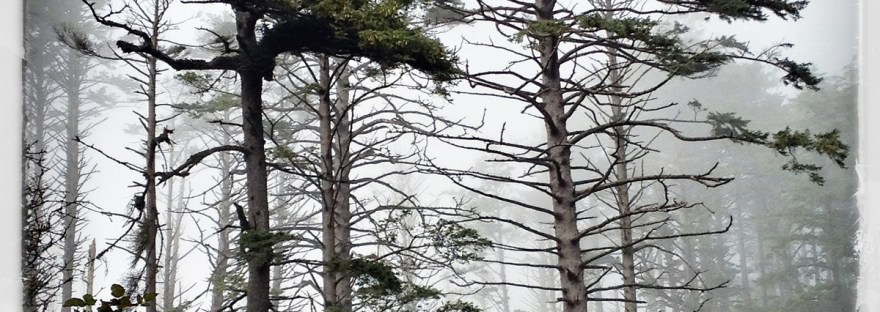
It's a quiet, foggy morning here in Seattle, and I'm thinking about ontology — the philosophical study of the nature of existence. There is something deeply dissatisfying about a choice between reductionism and hierarchy, for both seem to me equally wrong. Although in naturalistic philosophy hierarchy no longer needs the divine sanction of a god to justify it, the supremacy of human culture and human consciousness remains unchallenged, the assumed pinnacle of evolution, with the masses of quarks, quasars, oak trees and elephants relegated to the same old mindlessness of mere objects, only so much stuff. But rather than go into any more detailed analysis of these dense and sometimes unwieldy philosophies, instead I want to talk a little bit about fog...
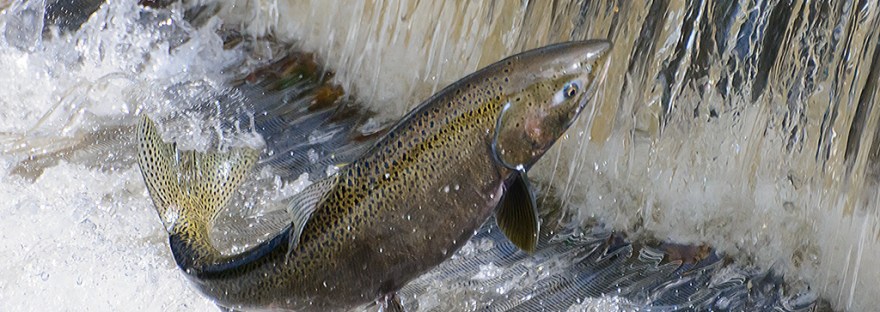
Totem Salmon: Life Lessons from Another Species, by Freeman House, is a meandering journey through the natural history of the Mattole River watershed in northern California, with particular focus on humanity's changing relationship with one of its keystone inhabitants, the Pacific salmon. The structure of the book in many ways mirrors the homeward journey of the salmon itself, from the depths of a shared ocean of experience back towards the headwaters rising from the heart of a unique landscape. I picked up this book hoping to brush up on some of my fishy facts and local history, but what I discovered was a story with a great deal more to give. House is a beautiful storyteller as well as an experienced conservationist, and his work reflects not only the careful eye and practical mind of a hands-on community activist, but also the raw heart and brutal honesty of someone madly in love with the natural world.
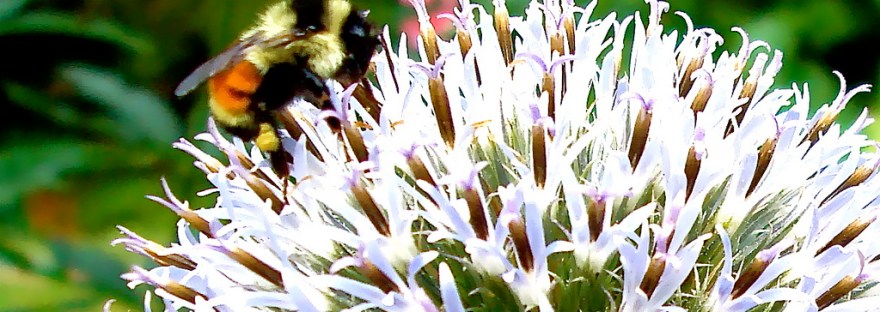
Different stories will inspire different people. For some, cooking and crafting is their way of fostering a relationship with the natural world, while others might be inspired by the greater call to serve the community on a global scale through conservation. If our efforts are effective and the stories we tell are inspiring, does it really matter whether we approach the work with the courageous heart of a fighter, or the gentle heart of a farmer? My post on invasive species provoked some really wonderful discussion from readers last week, reminding me once again just how diverse our attitudes towards the natural world can be. Even when we all agree on what practical actions we need to take, our motivations and reasons can be very different!
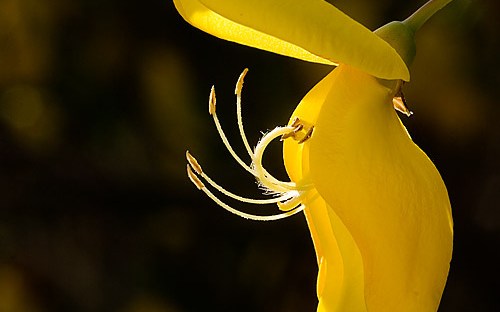
Given how harmful an invasive species can be, it's tempting to see them as wholly bad, the "enemy" of a healthy ecosystem that needs to be eradicated. For modern Pagans seeking to live an embodied spirituality grounded in the sacred land, invasives are powerful allies in coming to terms with our own ambivalent role in the ecosystems we inhabit, and the possibilities and choices that lie before us. Too often our modern society encourages us to see nature as fragile and untouchable, and humans as the worst intruders of all. Befriending invasives can teach us valuable lessons about how to be respectful, loving citizens of the planet that we call home.
However you celebrate the vernal equinox, may the many blessings of spring be with you today!
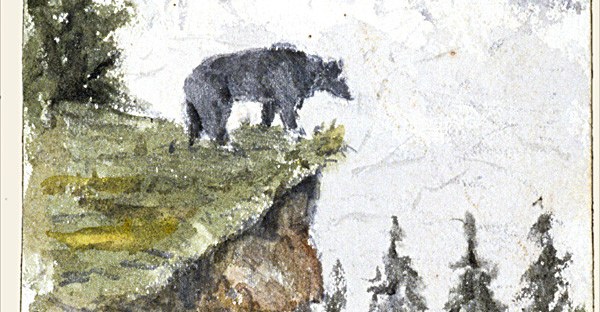
Not all of our companions will elbow their way into our lives and demand our attention. Some of them linger beyond the limits of our ordinary experiences, leaving only footprints and snapped twigs as traces of their presence. These are our guides to the depths of mystery and wilderness. They are dark wanderers who cross our paths only in the obscurity of a moonless night, whose form we seem to see only just on the periphery of our vision before it dissolves again into the tangled undergrowth of the unknown. They are the companions whose presence we sense with the thrill of uncertainty, that mixture of excitement and terror that gives rise to awe. Their breath is the sound on the edge of hearing that we catch just when we think we are alone. Lest we forget that nature is not only familiar and intimate, but deeply wild and strange. Lest we forget that some things are hidden, and will remain hidden. The bear is, for me, this kind of companion.
We want so very much to understand our gods, to know them intimately, to see how they work in our lives. It is tempting to dissect, to analyze, to categorize. And sometimes, it is necessary, even beneficial. We are categorizing creatures, we human beings. We pick out patterns as a matter of survival. When it comes to our gods, we reach for them not only with our prayers and offerings, but with our reason and our intellects — we would know them with our whole selves, in all their parts, in part so that we might know our own selves better in all our parts. The challenge is to delve into theology without killing its subject, to try our hand at analysis and critical thinking without pretending that the numinous divine is a dead thing that will hold still beneath our careful knives. Theology is not dissection. It is much more gruesome than that; it is vivisection.
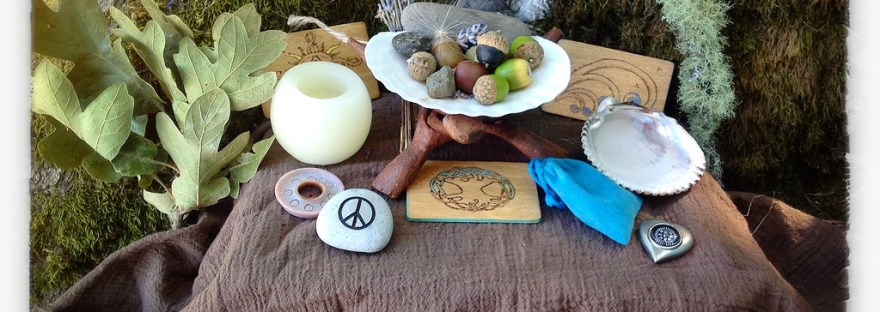
What is ecological polytheism? That was the question that I knew I'd eventually have to answer. There was something going on in the root-webbed dark, some new kind of way of being Pagan that was starting to take shape for me. I tried to answer this question, or at least articulate it, in a couple of posts over on No Unsacred Place, and they became two of the most popular posts on the blog. I wasn't the only one interested in asking these kinds of questions, it seemed. Lots of other people were wondering the same thing. What is natural polytheism? How does ecology inform my theology? How can I bring science and religion into conversation for a more grounded and earth-centered Paganism?
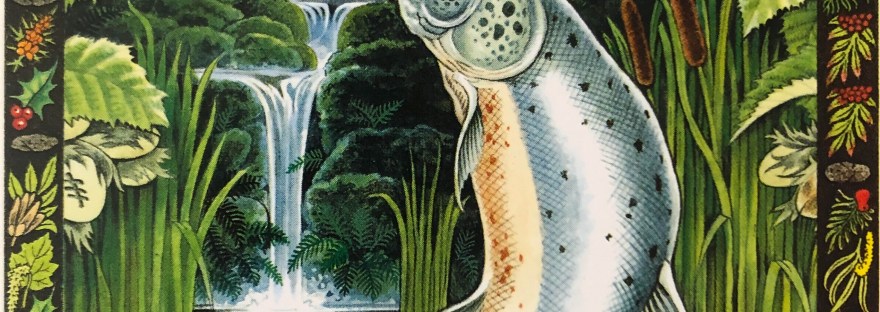
For me, Salmon has claimed her place along the year's wheel at Samhain-tide. The salmon run at Piper's Creek begins by the first day of November and lasts as late as the winter solstice. It is a time of cool, steady rain, a time of death and consummation. It is the in-between time, just after the Celtic New Year, but before the dawn of lengthening days. A time when new life begins in the dark, buried beneath the gravel of the streambed, invisible and silent. I think in many ways, modern Paganism is in this twilight time before rebirth as well. Seeded and kept alive from generation to generation after two millennia of broken traditions and scattered, assimilated cultures. We strive to root our traditions in the land, in a sense of place and in the presence of earth, but the social systems upstream don't make it easy.
 Alison Leigh Lilly