About two minutes in to exploring Steampunk as a counterculture movement, it dawned on me — this isn't historical re-enactment. It isn't about the past. It's about now, and the kind of society we want to live in, and the ways in which we want the world to work. It's playful, with room for both the burlesque and the gentile. Anyone who wants a title, can have a title. Anyone more drawn to the 'punk' aspect can play it that way. It turns out that there's room for anyone who wants in, and you don’t even need a pair of goggles. The surface of Steampunk offers a burgeoning fiction genre, an aesthetic that seems to be catching on all over the place, a music scene — sepiacore and chap hop, and no doubt more to come. There's a growing arts and crafts movement within the community, and there are going to be inventors, I have no doubt. There probably are already. Steampunk is about innovation in every area of human endeavour, and it's about doing good stuff, with a social conscience and a sense of humour.
Category: story
Yewberry: A Myth Retold
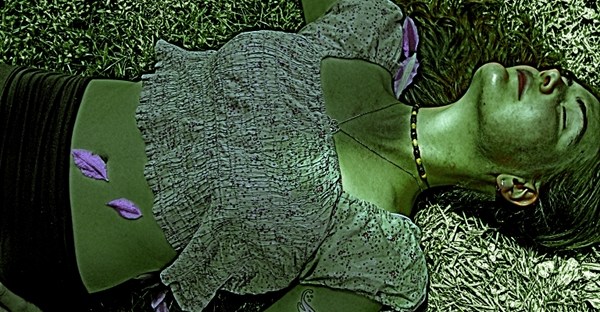
Now it is the end of autumn, I lay my body down. A hush. The hill is still humming with the day's warmth, the sun sinking into the far shore of the lake. For a moment, I can see it, as though with other eyes, submerged, rippling beneath the waters in arcing liquid wings of flame and dusk, flexing, alternating, a thousand of them, wings sprouting from the round, warm body settling into the depths. Then the vision is gone. I creep silently along the shore, my bare feet numb and rustling through the long, dried grasses of autumn. The mud is moist and rough on my soles, each step sending echoes of energy sliding up my calves.
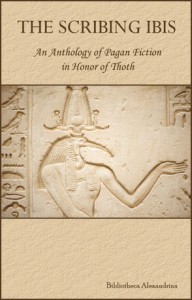
Share Your Love Story! » Win The Scribing Ibis
When my partner Jeff Lilly and I were first falling in love, I wrote a story called "Yewberry." Not on purpose. It just sort of happened one afternoon, after I'd been trudging through the ice-and-mud-thawing, bare-limbed woods of late February, my heart thrilling to the stirrings of warm-fuzzy romantic bliss for the first time in a long time. But never mind about that! You want to know about the contest, and how you can enter to win your very own copy of The Scribing Ibis. Don't worry, it's easy: Share your own love story. Keep reading to find out how you can enter and win!
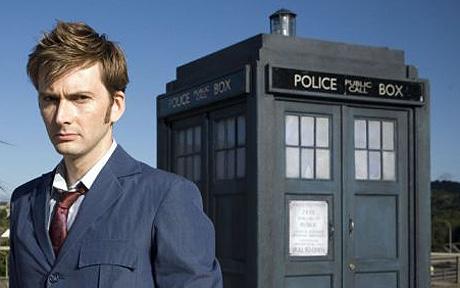
Not Really Dead (or, Bigger On The Inside)
We know he can’t stay in his current state of denial — we know he has the potential for greatness that demands he rise to the occasion, to become better than he was before. But that doesn’t make that transformative moment any less painful, nor the grief at the loss of humble John Smith, the old, limited self, any less poignant. The truth is that we grieve the old self because we love the old self, deeply, and the old self was a self of love. It had to be. Otherwise, we could never have been able to transform in the first place.
Ecstasy of Beltaine: Reflections on Love and Transgression
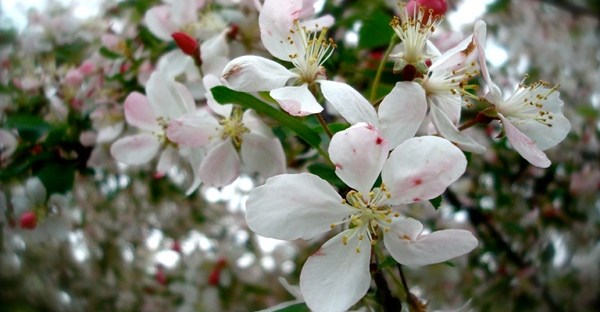
The significance of Beltaine reaches beyond merely being an agricultural festival focused on fertility and fecundity in service to the community, with romance acting as a bit of grease we can indulge in now and then to keep the Wheel turning. The holy day at the height of spring is also a day of ecstasy in the original sense, a day on which the attraction of life-force can pull us beyond ourselves and into communion with a larger Mystery, beyond tensions that might keep us too rigidly locked into unhealthy or hampering community bonds once they have outlasted their benefit. Along with Samhain, the other hinge of the year, Beltaine serves as a liminal time, a time of thresholds and permeable boundaries. The great ecstatic mysteries of sex and death dominate both these holy days.
Reinventing the Wheel
More to the point for me is this question: why is the ancient "wheel" better than the modern one? For me, there are obvious flaws in the modern "wheel," the approach that most contemporary religions take in answering the basic questions about life, the universe and everything. The most important and obvious flaw being their denigration of the earth and the natural world, or in many cases the mere fact that they haven't much to say on the matter. They feel like "square wheels," so to speak, that at best make for a bumpy, uncomfortable ride, and at worst get us stuck in ruts, our hard edges jammed firmly into the yielding earth and unable to move. And so I turn to ancient religions to learn how to soften those edges, refining the square into a smoother circle ...
After Beauty
Strange, that all of a sudden I remember the poem — the smell of the book it was in, like a palmed cigarette stub sweaty and stale with old smoke, and how worn it was, and loose in its faded jacket — and I don't recall the poem itself. Just that it was about a girl — I imagine her with oily hair in waves rich with grief that you could dip your fingers in — and perhaps a convenience store, closed for the night with security fluorescents churning in their cluttered hollows, or a living room in an old apartment with the shades drawn, or at least some other dark, crowded place where the noise and hands are hard and constant, tearing the throat out of dirty evening sunlight.