They say he did it out of boredom, but boredom is catching and soon the entire village had grown bored of his mischievous tricks. Each time he cried out that the wolf had come, and the villagers rushed to his aid only to discover no wolf in sight, they grew more annoyed, more disdainful — and more complacent...
Category: Holy Wild
A Steampunk Meditation for Self-Transformation
Today I have a guest post up over on Nimue Brown's ever-inspiring blog, Druid Life — Steampunk Meditation for Self-Transformation, a blending of Victorian-era esoterica and glibly modern steampunkishness inspired in part by the ancient Three Cauldrons of Poesy. The meditation (and yes, it works) is my latest contribution to the anarchic, silly, and in no way secretive Secret Order of Steampunk Druids, which coalesced sometime back in 2012 between sips of tea and chap hop battles.
The Nature of Fog
It's a quiet, foggy morning here in Seattle, and I'm thinking about ontology — the philosophical study of the nature of existence. There is something deeply dissatisfying about a choice between reductionism and hierarchy, for both seem to me equally wrong. Although in naturalistic philosophy hierarchy no longer needs the divine sanction of a god to justify it, the supremacy of human culture and human consciousness remains unchallenged, the assumed pinnacle of evolution, with the masses of quarks, quasars, oak trees and elephants relegated to the same old mindlessness of mere objects, only so much stuff. But rather than go into any more detailed analysis of these dense and sometimes unwieldy philosophies, instead I want to talk a little bit about fog...
Totem Salmon: Hunting the River’s Ghost
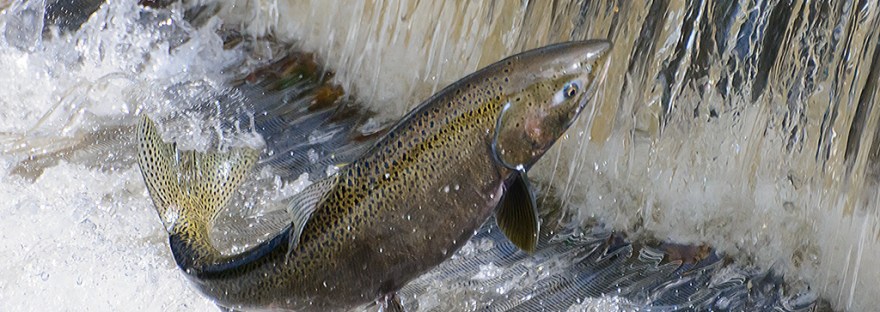
Totem Salmon: Life Lessons from Another Species, by Freeman House, is a meandering journey through the natural history of the Mattole River watershed in northern California, with particular focus on humanity's changing relationship with one of its keystone inhabitants, the Pacific salmon. The structure of the book in many ways mirrors the homeward journey of the salmon itself, from the depths of a shared ocean of experience back towards the headwaters rising from the heart of a unique landscape. I picked up this book hoping to brush up on some of my fishy facts and local history, but what I discovered was a story with a great deal more to give. House is a beautiful storyteller as well as an experienced conservationist, and his work reflects not only the careful eye and practical mind of a hands-on community activist, but also the raw heart and brutal honesty of someone madly in love with the natural world.
Data, Identity & Community in the Digital Age
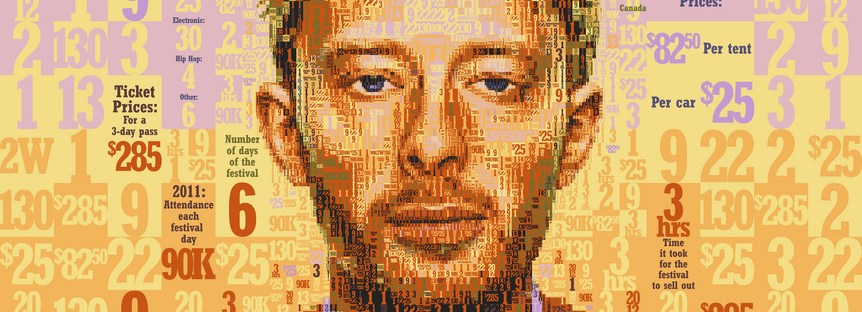
Jeff Lilly's most recent article raises a lot of questions about the assumptions we make when it comes to the relationship between knowing the facts and actually understanding what those facts can tell us. It turns out that huge stockpiles of consumers' personal information, known as "Big Data," might not be the Holy Grail that the tech industry would like it to be. Persistent cultural biases can blind us to unexpected interpretations, or even lead us to see patterns where none exist at all. But what does that mean for the rest of us? For those of us more likely to be on the receiving end of Big Data-driven marketing strategies and social media algorithms, the limits of Big Data are both a blessing and a warning. How will these new insights change the way we think about our online lives?
Nobody Likes You Because You’re Perfect
"One day I am sweet, another day I am sour," says the Irish trickster god Manannan mac Lir in his guise as the disheveled traveling buffoon whose hat is full of holes and whose shoes squish with puddle water when he walks. Manannan appears in folktales sometimes as a buffoon and sometimes as a richly dressed bard of talent and renown. When he is a buffoon, his words are sweet and his music sweeter; when he is a master of his craft, he comes off as a fake and an ass. When he is at home, he is a king whose otherworldly castle is thatched with white birds' wings. But the half-thatched homes of the mortal bards will never be complete. While the poets are away gathering their feathers, the winds have already swept away the last day's work. Which is the real god? The king, the poet, or the wandering buffoon? Which is the real writer? Which is the real me?
The Writer’s Mating Dance
Between research and writing, there is a lacuna in which almost anything can happen. The hush is nearly unbearable. In my mental landscape, ideas rustle and nudge towards one another through the tall prairie grasses, their haunches twitching with tension, ready to flee. Eros is thick in the air. Ecology rubs up against ritual theory, playing with the hem of her skirt. Bruce Lincoln is making eyes at Lewis Hyde. The deer of my dreams raise their heads to listen hard for the hunter. The salmon of wisdom are working their way home. Any moment, I'm going to start writing. Any moment...
The Pulse of Autumn
Why should our communion with the beloved dead depend on the coincidental turning of the Earth on its axis? Why should we not always be in touch with those who have crossed the threshold, in touch with our own mortality and death? One might as well ask why the angle of the sun should sometimes grace the crocuses and wet new buds of spring and at other times drop down heavy and hot into the deepest reaches of summer lakes, why childhood should burst with curiosity and buzzing movement and adulthood settle into the long, gentle pull of days one after another beneath a bright, cool sky. The truth is, I suspect, that there is no Other-world. That we live in this one world, together with the dead and the long-departed, drinking in the same gulps of breath as they once drank.
A Bureaucracy of Poets
Have you ever heard of a murder of crows? I strongly believe that the mass noun term for poets should be bureaucracy. Singly, poets have this reputation for being sensitive, articulate, deeply strange and haunted — not to say enlightened — creatures who drift through life with the veils lifted and the doors of perception open. Don't be fooled.
Why I Cannot Tell You About My Gods
When my friend Carl McColman says that language is tricky, and that God is bigger than the limits of the human mind, we might imagine our words are just so many rigged-up rubber bands, paper clips and packing tape with which we are, MacGyver-style, trying to capture a wild and mighty wind. Yet our words are our own breath given form by our body and its movements, and where else have we drawn that breath but from the winds themselves? Our speaking is a shaping of the wind within us, released back into the wild to work its way into someone else's body, moving with the ebb and flow of sound waves, pressing in against their eardrums, stirring the tiny hairs of their skin. To talk about language this way is to break out of the metaphor of objects and containers, and to see words as experiences in themselves.