We Pagans have a love affair with the past that leads us to try to model the rituals and practices of ancient times as closely as possible. But we live in a different world today. Despite the ornate beauty of certain approaches to ritual, I wince at the wastefulness I see sometimes. Can this really be what the gods want from us? Are we so busy trying to do ritual “correctly” that we fail to do it well?
Category: Deep Ecology
Druid’s Blade and Witch’s Broom: An Ode to Mistletoe
They say that what doesn't kill you makes you stronger, but that's only half the truth. In the face of our assembly-line obsession with efficiency and expendability, keystone species like mistletoe serve as powerful reminders of why individuality is so essential to abundance. True prosperity lies in the diversity of our communities and the ways that we support that diversity with our own unique gifts. It can be lonely, even a little frightening, to be different. But nature is messy. Nature is wild...
Wonder on the Wing: Lessons from the Owl Goddess on Climate Change
The Pagan gods are not exactly known for their forgiving natures. Yet as divine powers of regeneration and return, they offer a forgiveness all their own. Not the forgiveness of escape and abdication, nor the forgiveness of a benevolent Almighty on whose behalf we can act with unchallenged dominion. Rather, theirs is the forgiveness of restored responsibility, the response-ability that we possess as natural beings and citizens of the earth. After all, what do we seek when we seek forgiveness, but the chance to start again?
The Joy of Hidden Things: Tidepooling on the Salish Sea
Tidepooling is a practice in patient observation. It's also a reminder that some things happen in their own sweet time. That's the thing about low tide. Sun, moon and earth turn through the steps of their celestial dance, and once in a while you get lucky and the three of them meet just right in a moment of revelation. You have to be ready. I'm often humbled to realize how oblivious I can be to the wonders of the natural world all around me. And what treasures might yet be hiding right in front of me, in plain sight. After all, there are so many different ways to hide.
Animist Blog Carnival: Wakeful World Book Club
Welcome to the May 2014 edition of the Animist Blog Carnival! For this month's theme, the ABC hosts its first-ever virtual book club — exploring the work of renowned animist and Druid author, Emma Restall Orr. In the year or so since I first read it, I've returned to this book again and again. (The pages of my copy are now worn and bent, the margins thick with notes — the highest compliment I can give to a writer!) But what I've enjoyed most about the book are the endless discussions it's provoked. There is so much to chew on, and plenty to disagree with and debate. When grappling with questions about the mind, the soul and existence itself, every reader will inevitably bring their own unique perspectives and experiences to the discussion. This wonderful variety is reflected in this month's ABC!
The Hunt for a Wakeful World: Anthropocentrism & Subjectivity
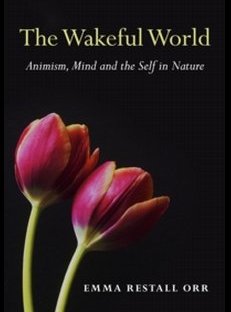
Druidic author Emma Restall Orr sets herself no easy task when she endeavors to articulate a philosophy of modern animism that can hold its own among the heavyweights of Western philosophy. In her latest work, The Wakeful World: Animism, Mind and the Self in Nature, she presents a compelling and intellectually rigorous case for nature's inherent value apart from our human judgements about its use or beauty. Although the book is a challenging read, the thoughtful reader will find much to ponder in her systematic treatment of a modern animistic perspective on concepts of self, soul, community, individuality and consciousness.
A More Wakeful World: Animist Book Club Call for Submissions
This May, the "ABC" in Animist Blog Carnival will also stand for the Animist Book Club! Here on Holy Wild, I'll be hosting this monthly gathering of bloggers and writers exploring the evolving role of animism in modern Pagan and earth-centered spiritual traditions. Most months, the ABC host chooses a theme for all participating writers to explore -- but this time, I wanted to try something a little different! The ABC theme for May will be: A More Wakeful World: Reviews and Responses to the Writing of Emma Restall Orr. The deadline for submissions is Sunday, April 27, 2014. Keep reading for more details on how to participate!
When the Frogs Begin to Sing
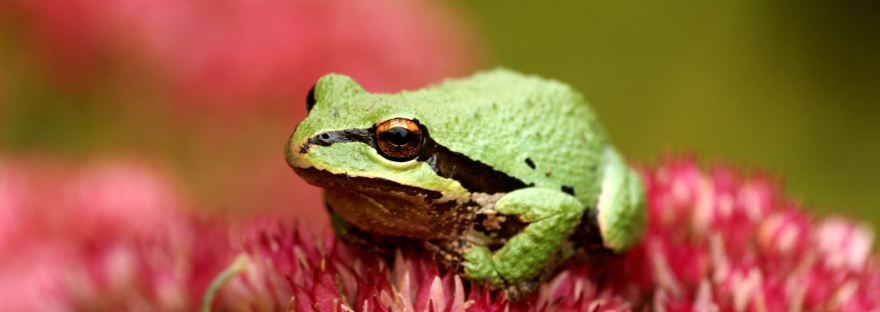
We hear the song long before we reach the pond itself ― the rolling, rhythmic voices rising up from among the grasses all around us as if we have entered the halls of some vast monastery during evening prayer. The thrum washes over us in the darkness. We step carefully, sweeping our flashlights back and forth across the path. The kids are tense with eager excitement for the hunt, whispering questions at each unfamiliar noise, flicking their flashlights over every stray stone or lump in the grass hoping to catch a glimpse of movement ― the flexing muscular limbs or the bulging throat of a frog. But there are too many of us. By the time we've reached the water's edge, the low chanting voices have dropped away and the whole place has fallen into silence.
What the Robin Saw: Anthropocentrism & Subjectivity (Part 1)
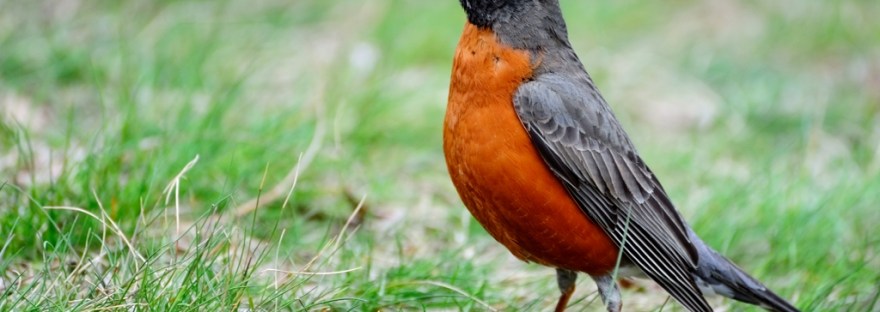
I was still pretty young the first time I heard an animal speak. It was a lazy summer morning, and I was curled up on the back porch with a book in my lap. All around me in the yard, the birds were singing... and then I saw, only a few feet from me, a robin. I tried to still every part of me — heart, body and mind — quieting even my thoughts so that I wouldn't startle him away. Then the voice spoke, precise and articulate, nonchalant, almost amused. It must have all happened in less than a minute. My reasoning mind struggled to make sense of what I'd experienced. But the words still echoed. Had it all been in my mind? No more than the stars are in the sky.
Apprentice to Winter: Snowshoeing in an Old-Growth Forest
Snowshoeing opens up possibilities for exploration that ordinary hiking can't. With a sturdy pair of snowshoes and eight feet of snow, winter is the perfect time to rise above ordinary obstacles and move deeper into the heart of the forest. To walk is itself a kind of ritual, a practice that changes us in subtle and significant ways. To move through the land, we have to be attentive and responsive to it. To survive these cold months, it's not enough to stay hunched in front of our computer screens all day long theorizing and debating. We must become apprentices of this goddess, Winter — to truly know her and her work, we must go out to meet her beneath the trees.