Muse in Brief

Disturbing the Bones of the Beloved Dead » No Unsacred Place

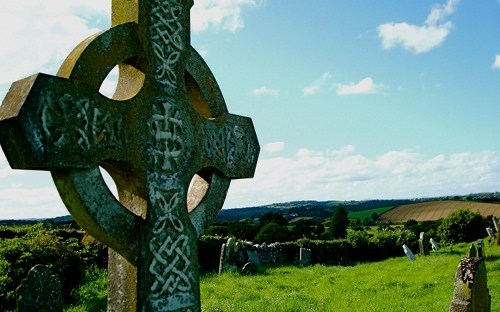
In my latest post over on No Unsacred Place, I share the heart-wrenching story of one of the lesser known consequences of mountaintop removal coal mining in the Appalachian mountains: the destruction of centuries-old family cemeteries that have been part of the landscape and the small communities of Appalachia for generations: "Many of the small communities scattered throughout Appalachia, where mountaintop-removal mining has done so much damage already, face the destruction of cemeteries that have been part of the wooded wilderness for centuries, left to become overgrown and sometimes forgotten as younger generations leave the area. These grave sites might not be officially registered or marked on any map, leaving them vulnerable to destruction from mining companies that buy up property and indiscriminately strip the landscape bare in an effort to reach the valuable coal deposits underneath. What minimal laws there are protecting cemeteries only apply to registered sites marked off by a fence and regularly maintained by a caretaker, and the historical value of family cemeteries can be difficult to prove, especially in cases where graves are unmarked or headstones have fallen into disrepair. ..."

Deep Ecology, Holy Wild

Exile: Beyond the Ninth Wave

Part of my identity as someone with a Celtic spirituality is the inescapable fact of exile. I am not only a person with Irish heritage living in the multicultural milieu of modern America, but I am also a polytheist and Pagan trying to connect with my ancestors across millennia of lost traditions from my place in a monotheistic, Abrahamic mainstream culture. It is within that diaspora — that exile — that I will have to discover, or forge, an authentic spiritual life.

Contemplation & Meditation, Holy Wild

Ancestors

Imagine how we are woven bodily into this world, pulsing veins and sinew wrapped tightly around bone. Blood and marrow so intimate in the secret recesses of our structure. This is what connects you to them. Your whole life presses forward. Like a single thread pulled taut until it aches, the spun-spiraled blood and body of your life pulls away from the past, yet anchored there by the fact of your birth, the stubborn persistence of your being. They had that too, and now here you are. What strange and unwieldy imperfections make up the beauty of your body, the lumpy joints and stringy tissue. And the tension in you, it is theirs as well.

Muse in Brief

Scientists Discover Life’s Common Ancestor, An Ancient Living Ocean » No Unsacred Place

In my latest post over on No Unsacred Place, I talk about the exciting discoveries of recent genetic research into LUCA, the Last Universal Common Ancestor of all life on earth, and what parallels we can draw to ancient creation stories about the divine origins of life from cultures all over the world.

Contemplation & Meditation, Featured, Holy Wild

Why Druidry? Revisited

To me, Druidry will always be a kind of mysticism or mystery religion, a spiritual path grounded in the ecstasy, creativity and vision that takes root in wildness. As a religion, modern Druidry has grown up around the archetype of the Druid as the wise sage, the inspired poet, the bright-eyed seer and the lover of nature. That archetype of the Druid is the acorn from which the oak of Druidry as a religion grows and expands, reaching limbs in all directions, sending down roots deep into the earth and the present moment. The Druid archetype is the ideal that helps to shape and guide the religious lives of those who practice Druidry — just as the acorn contains within itself the genetic patterns necessary to create the mature oak, and yet each oak itself must draw nutrients from its immediate environment and will grow in its turn to fit its own place and time. No two oaks that grow in the wild will be the same, and that process of growth is never-ending as each new branch, twig, leaf and root seek their own way towards sunlight and soil.

Contemplation & Meditation, Holy Wild

Why Druidry?

There is, I think, an old, white-bearded man who has taken up a place in my soul, like a seed of light or a hermit's lantern held up in the surrounding dark. His staff is heavy, planted in the ground. His brow is bright. In his dark eyes, that have seen such sorrow, there is still a star, a gleam like wisdom or stubborn joy. And he is a leader of a people, and he would lead them into the wilderness, that they might make of themselves whole constellations with the patterns of their dancing. That darkness is my body. That wilderness is my spirit. That constellation is the soul-song rising, woven from the sound of my breathing and the blood turning through my gnarled, twining veins.

Holy Wild, Mythology & History

Ecstasy of Beltaine: Reflections on Love and Transgression

The significance of Beltaine reaches beyond merely being an agricultural festival focused on fertility and fecundity in service to the community, with romance acting as a bit of grease we can indulge in now and then to keep the Wheel turning. The holy day at the height of spring is also a day of ecstasy in the original sense, a day on which the attraction of life-force can pull us beyond ourselves and into communion with a larger Mystery, beyond tensions that might keep us too rigidly locked into unhealthy or hampering community bonds once they have outlasted their benefit. Along with Samhain, the other hinge of the year, Beltaine serves as a liminal time, a time of thresholds and permeable boundaries. The great ecstatic mysteries of sex and death dominate both these holy days.

Holy Wild, story

Reinventing the Wheel

More to the point for me is this question: why is the ancient "wheel" better than the modern one? For me, there are obvious flaws in the modern "wheel," the approach that most contemporary religions take in answering the basic questions about life, the universe and everything. The most important and obvious flaw being their denigration of the earth and the natural world, or in many cases the mere fact that they haven't much to say on the matter. They feel like "square wheels," so to speak, that at best make for a bumpy, uncomfortable ride, and at worst get us stuck in ruts, our hard edges jammed firmly into the yielding earth and unable to move. And so I turn to ancient religions to learn how to soften those edges, refining the square into a smoother circle ...

Featured, Holy Wild, peace

Ancient Warriors, Celtic Peace

We consent to our own destruction, with the passing of time, with the changing seasons, with the restless intensity of living and breathing. Above the cold concrete and glass of the city skyline, sharp-wedged forms of birds wheel and tip in the dark, blustering sky. I find myself thinking again that it takes an awful lot of courage to live in this world sometimes, knowing that winter is coming, the dark is coming, and death, too, will eventually arrive to claim us. It takes courage to release ourselves, to enter willingly into the wild dance that whirls in this liminal space between life and death, creation and destruction. In my mind, the image of birds crashing through wind currents and swift-driven clouds commingles with the image of the warrior, poised in grace on the edge of chaos.