Recent Posts

Holy Wild, Muse in Brief

Quote of the Week

"The room where I live is plain as a skull, a firm setting for windows. A nun lives in the fires of the spirit, a thinker lives in the bright wick of the mind, an artist lives jammed in the pool of materials. (Or, a nun lives, thoughtful and tough, in the mind, a nun lives, with that special poignancy peculiar to religious, in the exile of materials; and a thinker, who would think of something, lives in the clash of materials, and in the world of spirit where all long thoughts must lead; and an artist lives in the mind, that warehouse of forms, and an artist lives, of course, in the spirit. So.) But this room is a skull, a fire tower, wooden, and empty. Of itself it is nothing, but the view, as they say, is good."

- Annie Dillard, from Holy the Firm
Holy Wild, News & Announcements

Welcome, World!

As both Rumi and T. Thorn Coyle have said, you must ask for what you really want. What I want, and what I've wanted for as long as I can remember, is to be a writer, and to share my writing with a community of engaged and interested readers. Sometimes that seems like a really easy goal: all I need is a computer or, if we're getting really rugged and old school, a pen and some paper. Other times, it feels like the most difficult, intimidating and impossible goal in the world. I care passionately about all the work that I do and all the writing I share, and the fear of being overlooked, unsupported, misunderstood or laughed at can loom large in my peripheral vision. But eventually I realized that if I'm not ready to stand up and brag about my work, to shout my enthusiasm and excitement from the rooftops — then why should I expect anyone else to?

Muse in Brief

One Year After Deepwater Horizon » No Unsacred Place

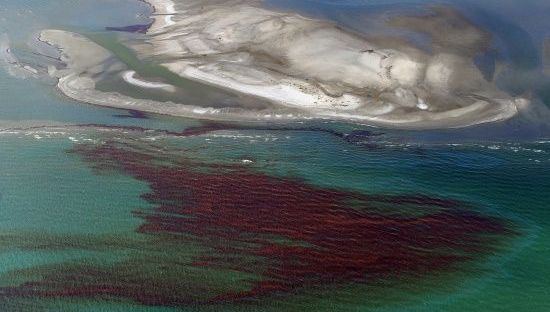
In my latest post over at No Unsacred Place, I take a look back at the Deepwater Horizon BP oil spill that occurred last April, one year ago tomorrow, to asses long-term damage and on-going clean-up efforts in the area. Though no longer making headlines, clean-up and restoration in the Gulf continues to be slow going, with harmful and unpredictable consequences effecting wildlife in the area for decades to come: "Of the nearly 5 million barrels of oil and 9 million liters of chemical dispersants released by BP into the Gulf of Mexico last year, approximately 25% remains unaccounted for, with another 50% forming surface slicks, ..."

Holy Wild, justice

Pagans and Nonprofits

I seem to be making a few gentle waves in that fine, dry wine I mentioned last week. My article, "Balancing Liberty and Law: Religious Nonprofits in America and Britain," published on Patheos.com last Thursday, was cited extensively today in an article in The Nonprofit Quarterly (and subsequently picked up by Jason Pitzl-Waters over at The Wild Hunt). NPQ reporter Rick Cohen writes: "Typically, debates about the tax treatment of faith-based organizations and of churches involve well-known and recognized religions - Christianity, Judaism, Islam, Hinduism, Buddhism, etc. – and sometimes debates..."

Contemplation & Meditation, Holy Wild

Silence in the Trees

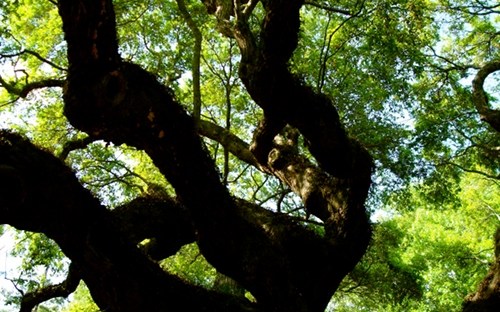
Tonight, reading David Abram's musings on the language of our embodied selves and this thickly expressive world in which we live, I wonder about the internet. As my friend Cat has taught me, the Quakers have a saying: "This Friend speaks to my condition." The Quaker Meeting is one of silence and unfolding into Spirit. When a Friend speaks in Meeting, it is with Spirit moving through them. The breath is Spirit in the flesh, and when it stirs, the Friend opens and allows the music of Spirit (the Song of the World, as we Druids call it) to rise up and overflow.

Holy Wild, News & Announcements

Balancing Liberty and Law » Patheos.com

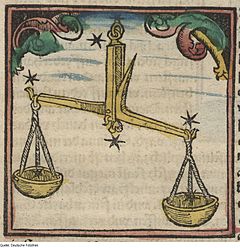
Just in time for Tax Day, I have a new article up over at Patheos.com's Pagan Portal on the balance of liberty and law, examining nonprofit tax status and government regulation of religious organizations in America and Britain: "In early October 2010, Paganism was making headlines worldwide. In the United Kingdom, The Druid Network (TDN) became the first ever Pagan religious organization to be granted charitable status by the Charity Commission of England and Wales—a move that, as major newspapers in both Britain and America reported, was tantamount to "officially recognizing" Druidry as a religion for the first time in thousands of years. The news was welcome and celebrated by many people in the Pagan communities of both countries, who viewed TDN's success ..."

Muse in Brief

Ambivalence of the Sacred Earth » No Unsacred Place

In my first post over at the new Pagan Newswire Collective blog project, No Unsacred Place: Earth and Nature in Pagan Traditions, I explore the Problem of Justice from an earth-centered perspective, and discuss its implications for the new Law of Mother Earth set to pass in Bolivia establishing the rights of nature: "The Problem of Justice for us is not so much why [suffering and evil] exist, but how should we respond to them? While monotheists might model themselves after an all-loving but ultimately transcendent deity who provides an example of justice and righteousness separate from and beyond the muck and mess of the world, our desire to 'attune ourselves to the earth' and model ourselves..."

Muse in Brief

Making Peace Out of Nothing At All » Pagan+Politics

In my latest article for Pagan+Politics, I explore the recent and fascinating scientific discoveries about the role that culture plays in the peacemaking and sociability of nonhuman primates: "For those of us whose religious practices are anchored in relationship with the earth and its many inhabitants, the scientific world has often seemed to lag behind in its recognition of the complexity and subtlety of nonhuman experience as we witness it on a regular basis. Studies revealing the intelligence and sensitivity of dolphins, elephants, corvine birds, honeybees and even trees and other plants, confirm what many of us have long known to be true..."

Holy Wild, story

Reinventing the Wheel

More to the point for me is this question: why is the ancient "wheel" better than the modern one? For me, there are obvious flaws in the modern "wheel," the approach that most contemporary religions take in answering the basic questions about life, the universe and everything. The most important and obvious flaw being their denigration of the earth and the natural world, or in many cases the mere fact that they haven't much to say on the matter. They feel like "square wheels," so to speak, that at best make for a bumpy, uncomfortable ride, and at worst get us stuck in ruts, our hard edges jammed firmly into the yielding earth and unable to move. And so I turn to ancient religions to learn how to soften those edges, refining the square into a smoother circle ...

Conservation, Holy Wild

Water on Water’s the Way

When we eat, we participate with Spirit and the gods in a dance of growth, death, decay and rebirth, as even our waste returns eventually to the land to nourish and enrich the soil from which our food grows. Plants transform the energy gifted to them by the sun into forms that can be absorbed and exchanged, and when we work, we release that energy again through the efforts of our hands, legs, mouths and minds to shape the world. Our breath is the breath of our ancestors, but also of the atmosphere and the weather, the winds and storms that encircle the planet and rustle the leaves of the tree just outside the window. And when we drink of those waters that well up from the earth, blessed, guarded and sustained by the gods and goddesses of the oceans... Read more...