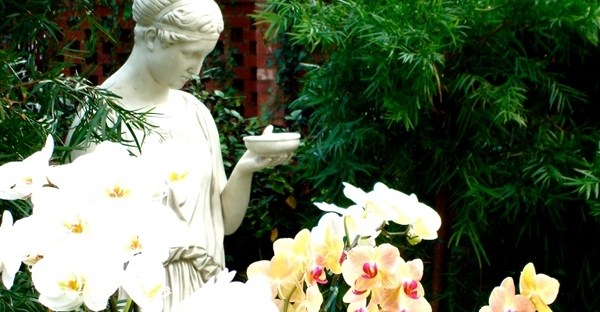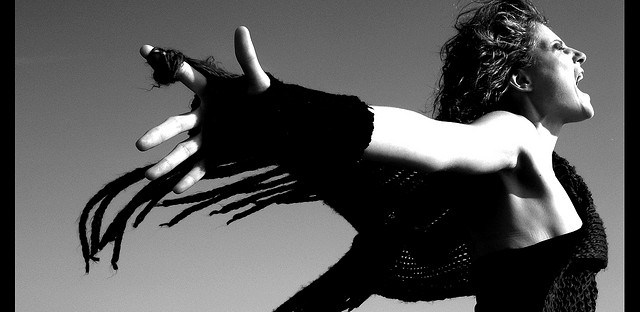
A Pagan friend of mine mentioned recently that Beltane isn't really a holiday they celebrate; being single and not all that interested in sex, they don't connect with a lot of the symbolism associated with the holiday. I can totally relate. Surely, Beltane isn't just a holiday for horny lovers. As part of the ever-spiraling dance of the seasons, there are a lot of blessings that this time of year brings that can be enjoyed by those of us who are chaste, single, or otherwise just not that interested in turning everything into a metaphor for girl-parts and boy-parts. So in the spirit of the season, here are seven things to love about a sex-free Beltane!
Tag: paganism
Seeking the Keystones of the Land
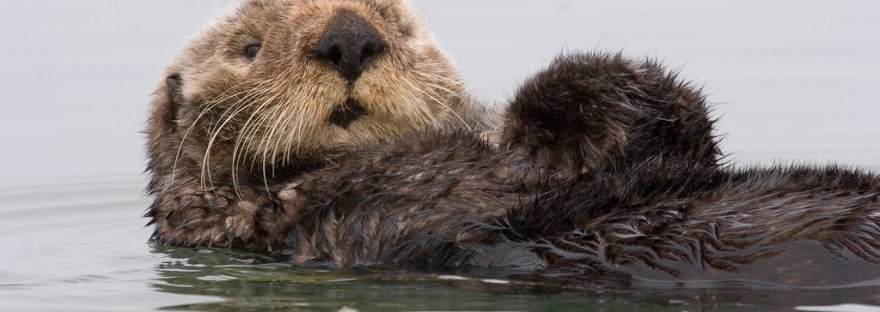
Spring has definitely sprung here in the rainy emerald city of Seattle: the salmonberry is blooming and, believe it or not, the sun is shining! (For now, anyway.) This past weekend, Jeff and I enjoyed a somewhat belated equinox celebration — we spent all afternoon hiking through the city's largest park (while I indulged in some wildflower photography and rather clumsy bird-watching), we observed Earth Hour Saturday evening, and we visited the Seattle Aquarium for the first time, where we made the acquaintance of some very adorable, very playful sea otters. And speaking of sea otters (which happen to be a keystone species out here in the Pacific Northwest), two new articles of mine were also published this weekend, both of them exploring the role of keystones as guides and companions in earth-centered spiritual practice.
Wordless Wednesday: Spring Blessings!
However you celebrate the vernal equinox, may the many blessings of spring be with you today!
Light a Candle to Begin
Christmas eve night, about nine o'clock. Basket slung over one arm and bumping into my hip with every step, I trudge through the snow. The ribbon wound around the basket's slim handle glistens in a hint of milky moonlight, gold thread woven in elaborate patterns through the deep red cloth. In the basket, a red pillar candle and two tapers — scented "seasonal berry" — jostle in a nest of intertwined greens, bits of douglas fir and blue spruce smelling sweetly of bent needles and dried sap; wedged among them, the frankincense sticks, the crystal bowl full of dark sunflower seeds and dried cranberries, the small jar of spring water decorated with silvery snowflake designs and curled bits of blue string. The snow crunches as I feel my way along the un-shoveled path through the park, some of it falling onto the tops of my moccasin-like shoes and slipping down inside to melt against bare skin.
Embarrassment: An Invitation to Growth
Embarrassment has been a hot topic in the Pagan blogosphere this week, and it has me thinking about my own relationship with the Pagan community. But it also has me pondering my relationship with embarrassment itself. I learned early on that when others perceived my embarrassment, they almost always assumed that it was because I was ashamed of myself, and I was encouraged — in all the subtle ways that culture shapes the individual psyche — to turn a critical eye on my embarrassment and question how it might reflect my various flaws. Maybe this is because, in our culture, male embarrassment is more often perceived as a value judgment about others, while female embarrassment is interpreted as a response to personal failing.
Why (Not) Be a Christian? – The Oasis
Meeter gives Christianity a bit of a soft sell, emphasizing all of the ways that being a Christian can help you get your head right and find a more meaningful way of living. But what he doesn't do is justify, or even articulate, some of the foundational ontological beliefs on which he's based his arguments. Since the kind of god we worship affects the kind of human beings we are, let's see if we can't find out a bit more about Meeter's god by looking at the kind of human he inspires.
Why (Not) Be a Christian?
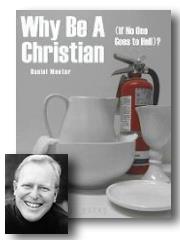
Why be a Christian (if no one goes to hell)? That might seem like an odd question for a Pagan Druid to be asking, but it's the title of a new book by Daniel Meeter that caught my eye.* I like to take up these challenges every now and then, in part because remembering the religious tradition that I came from helps to remind me why I left, and what lessons or insights of value I want to hold onto and carry with me into the future, even if I no longer call myself a Christian. After all, I remember being a Christian. In fact I was, if I may say so, a really fantastic Christian. I Christianed the hell out of that shit. So what happened? It's a long story (with a few twists and turns). Suffice it to say, I'm in a different place in my life now, and that place gives me a different perspective on the purpose of the spiritual life and the assumptions we bring to it. That's why I wanted to read Meeter's book. To stretch my muscles a bit, to remember what it's like to think about the world differently, and to keep my interfaith work bilingual and useful.
Women of Valor: Glorifying Motherhood, Abandoning Mothers
To me, a woman without children, the idea that a mother might not have even a few hours to herself to nurture her passions and pursue her own dreams is horrifying. Who could be more deeply concerned with the future of our society? Who could have more at stake in the work to see the arc of history bend swift and sure towards justice? Who could want more for a better world for future generations, than a mother? What words do we have for her? Is it enough to tell her that we honor her sacrifice and expect her to keep soldiering on? Do we pay lip-service to her noble self-giving as a way of refusing her the full depth of her desires, the fullness and complexity of her humanity? Or do we find a new way of living together?
Deity Dumped
"She didn't say it in so many words, but I got the distinct impression that she thought we should 'see other people...'" My voice trailed away. Folks sitting nearby in the restaurant who didn't know we were husband and wife probably thought Jeff was helping me through a break-up with my girlfriend. I found myself sobbing. I felt cut off and vulnerable. Even if I'd wanted to honor her, I didn't know how. What ritual forms to use, what offerings to make, what actions to take. The strong intuitive connection that I felt pulling me forward didn't seem to be so tame in any case. She didn't want scripted prayer or the right kind of incense or historically accurate idols on the altar. She wanted me out in the wilds, she wanted me raw and free and dancing with devotion. I was going to have to change my life...
Sincerity, Competence, Integrity: Readers Respond
My last post has generated some fantastic conversation both in the Meadowsweet Commons and elsewhere online. I'm still sweltering at my parents' house and will be traveling home again this weekend, so although I'm in the middle of composing a response exploring some of the ideas readers and commenters have shared, that post probably won't be up for another few days at least. In the meantime, I wanted to highlight some of the many insightful comments my last post has inspired. There is so much more to say on this topic, and it's one that I think lies at the very heart of not just Pagan leadership, but also Pagan spirituality in general. What do we emphasize in our rituals and spiritual work, and why? How do different forms of ritual shape our approach to these questions? How do we choose our leaders, and just as importantly, how do we support them in ways that allow them to continue to grow, explore and take risks? What are your thoughts on the relationship between sincerity, competence, and integrity?