"Cosmic Dance," by Prabhu B Doss (CC)
art, Featured, Holy Wild, peace

Art, Entertainment and the Technology of the Sacred

In light of recent events and discussions, I wanted to share this essay as a robust defense of the sacred value of art, poetry and satire within both our theological explorations and our political discourse. It is my view that ambivalence itself can be sacred, for it opens us to authentic experiences of others which may be unexpected or challenging, and so we can appreciate this ambivalence and the art forms that express it as powerful and meaningful aspects of our relationship with the numinous, and with each other.

Holy Wild, Poetry & Music

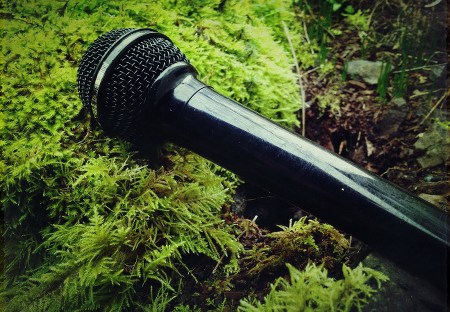
Polytheist Rap Battle

As I continue to work at my on-going exploration of anthropocentrism and its influence on modern Pagan theology and ritual, time passes here in the damp and half-wild city of Seattle as winter slow-dances with spring. This past weekend, we were blessed with a dusting of snow, followed by the hushed drizzle of overnight rain. The daffodils in the front yard are lifting up their little green hands in prayer, and the neighborhood hummingbird perches as sentinel on the highest twig of the lilac tree, flashing his breast in the sun. And everywhere, the damp plush moss! It's that time of year when I am restless to be outside... and sometimes restlessness gives way to snark. So while I'm off wrestling the hobgoblins of cabin fever, dear reader, here is a touch of silliness for you to enjoy.

Deep Ecology, Holy Wild, Theology

Defining Anthropocentrism

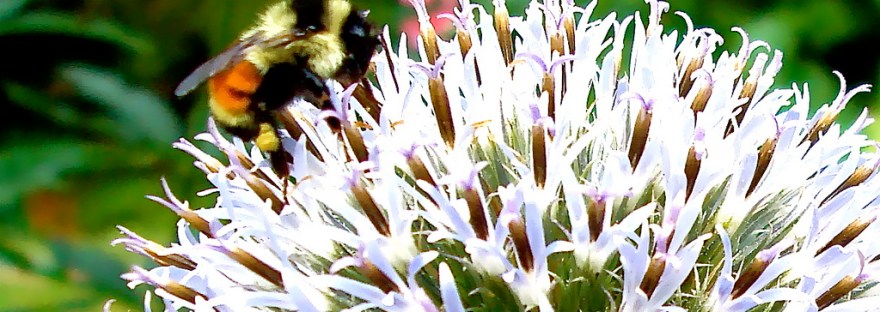
What is anthropocentrism? Turns out, there is no single, simple answer to this question. (Just among the nearly fifty books on environmental ethics and deep ecology that I have, only one actually offers a definition of the term, despite almost all of them referring to it in their discussions. As with many words, its meaning often has to be teased out and inferred from context.) In my earlier post I hinted at the beginnings of a definition when I referred to an approach to ritual that "takes for granted a worldview in which humans are the only measure of what is real." The question of how our idea of "the real" and our practical responses to it (for instance, through ritual activity) influence our underlying values and where we locate (or create) meaning is a complex conversation in its own right, and it is in this particular theological meadow that I'll do much of my lingering and bee-gazing in the following posts. But for now, it's probably more helpful to sketch out a basic definition, one we can use as a kind of measure against which we can hold up more complex, fidgety ideas later in the conversation...

Deep Ecology, Holy Wild

Talking about Anthropocentrism in Modern Paganism

On the same day I published "Gods Like Mountains, Gods Like Mists," Irish animist Traci Laird also shared a piece in which she confronted the issue of anthropocentrism in modern Western Paganism more directly. She points out, very rightly I think, that "the belief that human-persons are the most significant species on the planet, plays out within paganism in subtle and tricky ways." The response to our two posts has been incredibly varied, with writers across the Pagan blogosphere grappling with notions of anthropocentrism that range so widely at times it seems they're hardly talking about the same thing at all. The more responses and reactions I read over the past couple weeks, the more I realized that the issue of anthropocentrism in Paganism is incredibly complex and at times very confusing. Subtle and tricky ain't the half of it! And so I wanted to spend some time teasing apart some of these ideas about anthropocentrism and anthropomorphism in Pagan ritual and theology.

Holy Wild, Rite & Ritual

Frost and Stone: Grounding Energy in Winter’s Dark

There is ice in old Earth Mother's blood these days, and everywhere the ground is as hard as unyielding stone. The winds are biting cold. The sunlight, though still low on the horizon, is bright and sharp. It glints off the edges of every surface, refracted, scattered in a thousand directions. I sit in the shadow of a great evergreen tree outside, struggling to root, straining to bring the manic energies back into balance. The whole world seems to be cold fire and frenzied air. This won't do. I have to find another way...

Earth Wind Water, by Christopher Beikmann
Deep Ecology, Featured, Holy Wild, Theology

Gods Like Mountains, Gods Like Mist

My gods are not tame. They do not always come when they are called. This is not a failure of ritual or a weakness of belief. It is the nature of my gods. I would no more expect a god to "show up" in my ritual space than I would expect to be able to call a mountain into my living room. That is simply not the nature of mountains. If I want to meet a mountain, I am the one who must move. Because I do not believe that humans are the only beings with agency in the world, I do not expect my gods to express their agency in the same ways that human beings do. There are gods who forever remain elusive, whose identities shift with the landscape, the seasons and the stars. And there are gods so intimate that they are never really absent at all, and meeting them is not a matter of inviting their presence but rather of quieting my own expectations and learning how to listen. There are gods whose presence looms like a mountain range on the horizon, and gods with(in) whom I walk with grace, my footsteps just one more melody in the great pattern of their being. What does hospitality look like to a mountain? How does a forest speak its mind? What does it mean to invoke a god of mist and sea on a mist-strewn shore?

Deep Ecology, Holy Wild, Theology

The Goddess, the Broom and the Barred Owl, Part 5

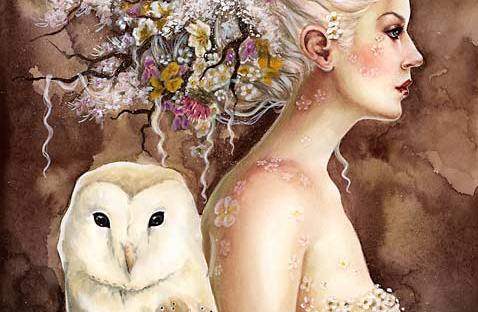
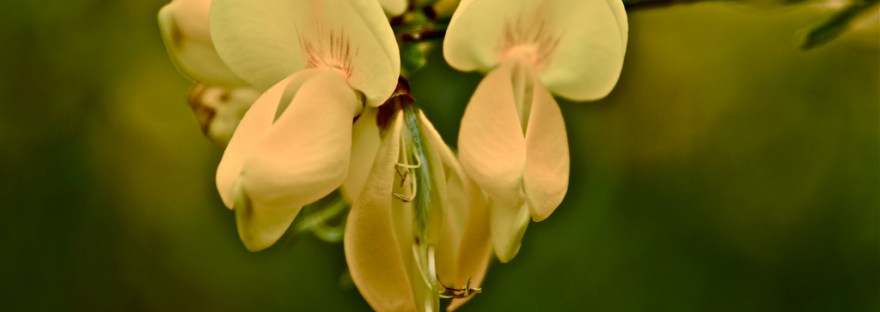
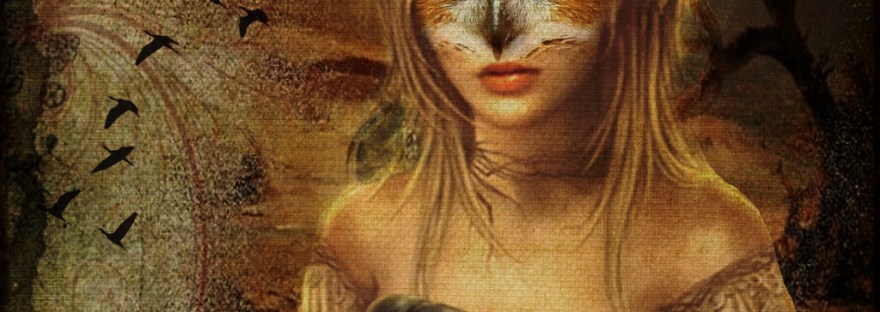
What were you expecting? A tame goddess who can be bribed with easy offerings? A pleasant springtime girl who asks for nothing but your adoration in return? An owl-feathered maiden of the forest to indulge your taste for the exotic and the dark? Were you hoping for a bedtime story with a moral at the end? Blodeuwedd's story isn't over. It is on-going. It is forever unfolding in every moment, in every place where nature and culture conflict and comingle, in every breath that weaves us as human animals into the more-than-human world. It would be too easy to approach Blodeuwedd through mythology and ritual alone, to disconnect her from the messy, erotic, death-riddled real world of broom blossoms and barred owls.

Deep Ecology, Holy Wild, Theology

The Goddess, the Broom and the Barred Owl, Part 4

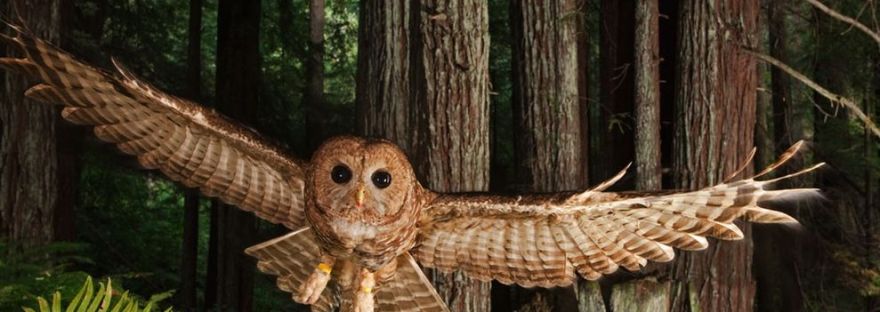
In the Pacific Northwest, Blodeuwedd's darker aspect manifests as innocent victim as well as hapless intruder. Not one or the other, but both. As the Spotted owl, we might experience Blodeuwedd as vulnerable, elusive and withdrawn, the unfamiliar Other who demands that we place our loyalty to her above our human concerns, who asks more of us than we are perhaps willing to give — the hag who demands a kiss as the price of sovereignty. As the Barred owl, she is the adaptable trickster again, the wanderer driven by hunger into new lands, whose appetite and determination threaten to overturn the current order. Seeing the owl in the goddess, we also see the goddess in the owl. Do we sacrifice the one in service to the many, without that one's consent? Do we kill this one owl, or eradicate this one species, for the sake of the balance and prosperity of the whole?

Deep Ecology, Holy Wild, Theology

The Goddess, the Broom and the Barred Owl, Part 3

How do we understand the innocence of Blodeuwedd as the Flower Maiden, and her punishment as the Owl-Faced Old Maid? In the web of life in which everything has a proper and harmonious place as part of a greater dynamic balance, those beings who wander aimlessly without place or purpose — or who refuse to submit to their fate as decreed by the greater order of things — can potentially pose a threat to that balance, causing disruption and harm in their desperate desire to survive. Love of life can lead us astray. In the utter innocence and fierce love of the goddess there exists a lurking danger, where wildness shades into chaos and disharmony. Blodeuwedd is a goddess created in the image of the human being, for a very human purpose: to love and be loved. And yet she retains (as do we all) the undeniable influences of the natural world from which she was made, a more-than-human world in which love and life-force intermingle and overwhelm as the indomitable eros of passion. She exists in a liminal state, very much like our own species. She is a goddess of exile and displacement, and for that reason she is also a goddess of invasion.

Deep Ecology, Holy Wild, Theology

The Goddess, the Broom and the Barred Owl, Part 2

Blodeuwedd embodies the spirit of the trickster. She is herself literally the work of trickery and artifice. Her physical body is not a unity, but a cobbled-together assortment of twigs and blossoms given a kind of unnatural animation through the magic of Gwydion. And although she is designed by men far more powerful than she is for one specific purpose — to serve as Lleu's wife and queen — yet she thwarts that purpose through lies and deceit, following the call of her own hunger, her own passion and desire. As a result she is cursed, like so many other trickster figures, to aimless wandering in the wilderness, a social outcast. She is both subhuman and superhuman, both bestial and divine. She is the thief who steals away the beloved from the rightful king, except that it is her own self that she steals away — is this theft, or reparation? Either way, this is a goddess familiar with dislocation and disconnection, and one who embodies within her very being the ambivalence of human technology and how it mediates our relationship with the natural world.