Google Analytics is fascinating. For instance, this past week and a half, my readership shot up to more than 10 times the average of the previous week (thanks to my inadvertently controversial post, "I am a Conscientious Objector in the Spiritual War"), before dropping back down to pre-bump numbers. The majority of these referrals came from Facebook. Yet when I look at the statistics for time spent actually viewing pages on the website, a shocking 60% of those viewers spent 1 - 10 seconds on the site. Another 20% spent 11 - 180 seconds viewing the site. Which means that about 80% of readers from this past week spent less than three minutes actually reading the contents of the site before navigating away again.
Tag: community
A Pagan Goes to the Wild Goose, Part One
Last month, I had the fantastic opportunity to attend the inaugural Wild Goose Festival down in central North Carolina, a gathering of progressive and emergent Christians interested in engaging with questions of social justice, peace, community, art and spirituality in a postmodern, multicultural world. I admit, as a Druid and a Pagan, I had my trepidations about attending a Christian festival — worries about what kinds of assumptions others would have about my own religious affiliation, anxieties about potential misunderstandings or miscommunications that could arise (although growing up Catholic and holding a degree in comparative religious studies, I'm reasonably well-versed in the unique ways Christians sometimes use language or make off-hand Biblical references) — but I resolved to set aside both my fears and my cynicism and attend the festival with as open a mind and as soft a heart as I could.
Chasing the Wild Goose
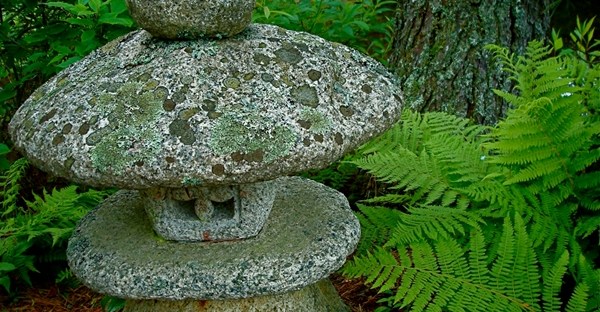
I think there is power in the metaphor of the "Wild Goose" — An Geadh-Glas — the name in Celtic Christianity for the Holy Spirit. The Holy Spirit is, after all, that Person of the Trinity which is the indwelling Spirit in all things, the immanence of the divine in the world itself. She is the balance and compliment to the transcendent God-the-Father. She is the fire of inspiration, the creative power of eros, the source and sustainer of community, the untamable wildness of hope. When we go on a "wild goose chase," we can feel that we're going in circles, spiraling silly around that which is elusive and mysterious. I can't help but think that my Celtic ancestors knew this about the Wild Goose, too — that those who follow her follow her into loneliness and sorrow, listening to her keening echoing over the solitude of the wilds.
Religious Branding
Are you a good ol' fashioned, All-American Pepsi kind of girl? Are you a fitness nut, chugging down Aquafina by the gallon, sipping your Ocean Spray grapefruit juice at breakfast, maybe indulging in a Lipton Diet Green Tea for lunch? Do you like the caffeine rush of Mountain Dew or AMP Energy to wake you up in the morning? Or maybe you're a bit of a hippie, chilling out with a SoBe or a Tazo? And how much does it matter to you that all these drinks are made by the same company? That's also the problem with branding. It's shallow. It's ephemeral. It's easy. It obscures not only the deep connections that we actually share with one another, but also the very real and more intricate diversity that is a part of any community no matter how apparently homogenous on the surface.
Worshipping Nature in the Digital Age
At the heart of my spiritual life rests the deep knowing that ritual is a way of listening to the Song of the World as it moves through the earth and the land, and engaging with that Song as something holy, wholly challenging and transformative. Shared ritual is when we accept the burden and blessing of being embodied beings of this dense, physical world that gives us life, and when allow ourselves to respond in kind, to speak back to the natural world with its energies and currents and wild mysteries. Ritual is not for our sake alone, but for the sake of the whole world. It is for the sake of the solitude and silence that surrounds us, that frightening shadow of void and absence that makes us who we are, makes us whole.
Webbing the Whole Wide World
It's pretty cool to see that I have readers in places like Moscow (Russia), Shenzhen (China), Sydney (Australia), Jiddah (Saudi Arabia), La Paz (Bolivia), and even Nairobi (Kenya). Though that last one might have just been Peter. Obviously, the vast majority of my readers live in the United States (tied for second: Canada and the UK). I have readers in 42 of the 50 states. Only 42?!, you ask. I know, right?
body politic | A Sonnet
body politic noun : (1) human organ of many heads ; tongues swarming from them [ as in, unison of insects ] ; hands, tangled beds of nails on which to rest evenly so as to spread weight, pressure without injury : (2) threat posed by ground swellings ; manifestation of projected intent to harm [ as in, the body of our enemy is dead, but not his intention ] : (3) the myth of history (archaic) [ ‘twas his own love that killed this shepherd, not our need to kill, and we remain innocent ] ; public will ; institutionally anointed gore to ensure death passes over our door
Ecstasy of Beltaine: Reflections on Love and Transgression
The significance of Beltaine reaches beyond merely being an agricultural festival focused on fertility and fecundity in service to the community, with romance acting as a bit of grease we can indulge in now and then to keep the Wheel turning. The holy day at the height of spring is also a day of ecstasy in the original sense, a day on which the attraction of life-force can pull us beyond ourselves and into communion with a larger Mystery, beyond tensions that might keep us too rigidly locked into unhealthy or hampering community bonds once they have outlasted their benefit. Along with Samhain, the other hinge of the year, Beltaine serves as a liminal time, a time of thresholds and permeable boundaries. The great ecstatic mysteries of sex and death dominate both these holy days.
Pagans and Nonprofits
I seem to be making a few gentle waves in that fine, dry wine I mentioned last week. My article, "Balancing Liberty and Law: Religious Nonprofits in America and Britain," published on Patheos.com last Thursday, was cited extensively today in an article in The Nonprofit Quarterly (and subsequently picked up by Jason Pitzl-Waters over at The Wild Hunt). NPQ reporter Rick Cohen writes: "Typically, debates about the tax treatment of faith-based organizations and of churches involve well-known and recognized religions - Christianity, Judaism, Islam, Hinduism, Buddhism, etc. – and sometimes debates..."
Balancing Liberty and Law » Patheos.com
Just in time for Tax Day, I have a new article up over at Patheos.com's Pagan Portal on the balance of liberty and law, examining nonprofit tax status and government regulation of religious organizations in America and Britain: "In early October 2010, Paganism was making headlines worldwide. In the United Kingdom, The Druid Network (TDN) became the first ever Pagan religious organization to be granted charitable status by the Charity Commission of England and Wales—a move that, as major newspapers in both Britain and America reported, was tantamount to "officially recognizing" Druidry as a religion for the first time in thousands of years. The news was welcome and celebrated by many people in the Pagan communities of both countries, who viewed TDN's success ..."
 Alison Leigh Lilly